A cataract is cloudiness in the focusing lens of the eye. The eye works very much like a camera. Light rays enter the eye and are brought into focus on the retina by a small lens inside the pupil. In later life, the eye undergoes aging changes which result in a loss of clarity of this lens. As the lens loses clarity, the image projected to the retina becomes less sharp. Early in cataract formation, a change in glasses may help to improve the vision. Eventually, however, as aging changes continue, the lens becomes so cloudy that vision can not be improved without surgery.
How Cataract Affects Vision
Cataracts cause a generalized fuzziness of vision. The automobile is an indispensable facet of life in Los Angeles, and most often, the first symptom of cataracts in our culture is difficulty in seeing street signs. Cataracts can also interfere with reading and can result in glare and loss of visual clarity both in bright light and at night.
Can Cataracts be Prevented or Reversed?
Research suggests the cataracts are caused in part by long term exposure to ultraviolet light. It is important, therefore, to wear ultraviolet blocking sunglasses whenever we are outside for extended periods to help protect the lens. Antioxidant vitamins may also help to forestall the onset of cataracts. Once the lens becomes cloudy enough to affect the quality of our vision, however, the only effective treatment is cataract surgery.
How are Cataracts Removed?
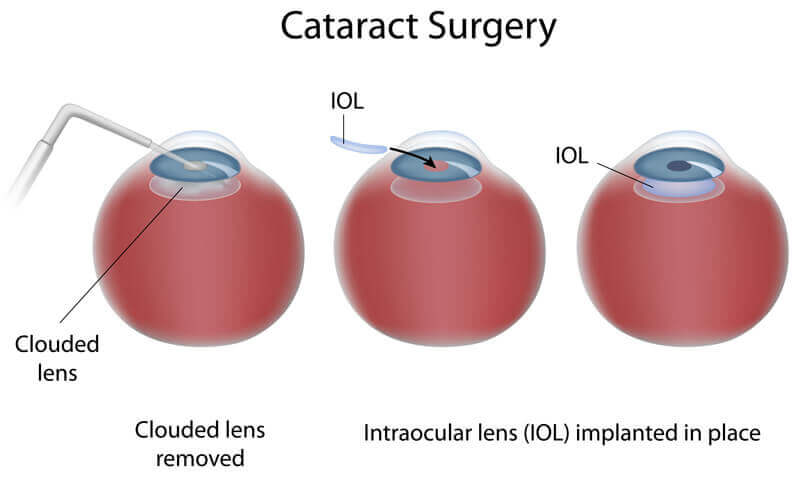
Today’s most advanced technology involves a gentle high frequency sound device called a phacoemulsifier. The “phaco” device allows an experienced surgeon to liquefy the cloudy cataract and remove the cloudy material through a tiny incision less than one eighth of an inch in size. Sutures are generally not necessary, and an eye patch is usually not needed. The procedure is performed in our outpatient surgery facility, takes 15 to 45 minutes and is not painful. The majority of patients note a substantial improvement in vision by the next morning. Drops are necessary for a few weeks after surgery, and patients are encouraged to avoid heavy lifting for two weeks.
Intraocular lenses are used to replace the cloudy lens removed at the time of cataract surgery. All of the cloudy lens material must be removed in order to restore vision and prevent recurrence of the cataract material. Intraocular lenses are positioned in the same location as the human lens and are supported by the same structures that support the natural lens.
What Intraocular Lens Options are There?
Today there are two basic types of intraocular lenses (IOLs): Monofocal IOLs which have a single point of clearest focus and the new technology IOLs which provide a greater range of focusing power. For a more complete discussion of the differences between monofocal IOLs and the newer technology IOLs, please see the sections of our website discussing Multifocal lenses, such as the ReSTOR® and the ReZoom™ as well as the Crystalens™.
Colvard-Kandavel Eye Center offers personalized eye care services for patients with routine and complex eye conditions. Our team is here to help you make an appointment with the specialists that you need.